

Embryo cloning for stem cells sparks calls for ban
Seattle ? In a clash of politics and science, the first successful cloning of a human embryo — and the extraction of stem cells from it — has ignited new calls for a ban on all forms of human cloning in the United States.
The cloning announcement by South Korean scientists prompted members of Congress to ask for immediate legislation Thursday.
“Cloning human beings is wrong. It is unethical to tinker with human life,” said Rep. Joe Pitts, R-Pa. A ban must be passed, he said, “before this unethical science comes to our shores.”
The Bush administration favors such action and referred reporters to a statement by the president calling for “a comprehensive and effective ban.”
Sen. Edward Kennedy, D-Mass., who voted against a bill passed last year by the House that called for a ban on human cloning, said there needed to be legislation that would prevent cloning of babies, but permit “lifesaving stem cell research to proceed under strict ethical guidelines.”
Two South Korean scientist who announced the landmark achievement here Thursday said they already had been the target of street demonstrations in Seoul even though their work is directed at treating diseases and not at making cloned babies.
Woo Suk Hwang, lead author of the study, admitted that the technique developed in his lab “cannot be separated from reproductive cloning” and called on every country to prevent the use of the technology in that way.
Shin Yong Moon, a co-author of the study, said the work must continue because of its great promise for treating of diseases such as Parkinson’s, Alzheimer’s, spinal cord injury and diabetes.
Both Hwang and Moon are researchers at the Seoul National University.
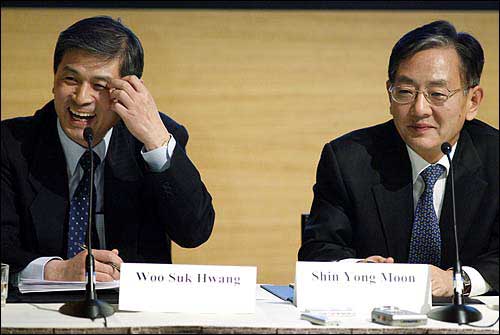
Woo Suk Hwang, left, Shin Yong Moon and their team of researchers are the first to successfully clone a human embryo, and then cull from it master stem cells that many doctors consider key to one day creating customized cures for diabetes, Parkinson's and other diseases.