

Health briefs
Students need exercise during break from class
Weary students may want to head for the couch on winter break, but not exercising could zap their energy level even more.
“Physical activity makes people feel more energetic, not less,” said Dr. Cheryl Braselton Anderson, assistant professor of pediatrics at Baylor College of Medicine in Houston. “Exercise can be a fun activity centered on the holidays — like taking family walks to look at decorations.”
Anderson offers these suggestions to promote fitness during the holiday season:
- Don’t try to start a diet during the holidays. It’s almost impossible. Instead, be aware of what you’re eating and try to control the high-calorie foods. Also, pay attention to portion sizes.
- Be sure to continue with some kind of physical activity to keep weight gain in check and fitness gains from slipping.
- Doing moderate intensity activity is a good goal. Walking after meals is a great way to get in easy and relaxing exercise.
- Parents should not totally ban television and video games, but kids could use reminders to get up and be active.
Tips to improve the air inside your home
Mary Ellen Pinkham host of HGTV’s “TIPical Mary Ellen,” provides these tips to improve the air quality in your home:
- Check the air filter for your home’s heating and air system at least once a month to see if it needs replacing.
- Open windows and doors whenever possible to air out of the house. Use window fans to keep air circulating.
- Don’t accept clothes from the dry cleaner that smell heavily of chemicals. This is a sign they haven’t been dried properly. Also, always hang items outside to air out a bit when you bring them back from the dry cleaner.
- Many common household products contain hazardous fumes and should only be used outside or in a very well-ventilated area. These include paints, varnishes, paint strippers, pesticides, wood preservatives, insect repellents, cleansers and disinfectants. Avoid storing these products in the home; put them in the garage or a storage shed.
- Mold can grow once the humidity levels rise above 70 percent. Buy a hygrometer to measure humidity levels. Use a dehumidifier to get rid of excess humidity; make sure to clean it regularly to prevent mold growth.
Technology improving Lasik eye surgery
In May, the U.S. Food and Drug Administration approved the CustomVue system by VISX Inc. after a study found that 94 percent of patients had 20/20 vision after six months and 98 percent had 20/20 vision after a year. In October 2003, the FDA approved a similar system, CustomCornea by Alcon Inc.
Both use what is called wavefront technology, a more sophisticated kind of laser surgery.
Conventional Lasik uses a person’s eyeglass prescription to tell the doctor how the cornea needs to be reshaped to correct nearsightedness, farsightedness or astigmatism.
But no two people who have their vision corrected with glasses necessarily see at the same level. These defects can’t be detected in standard testing.
The new Lasik procedures employ “wavefront” technology — beams of light aimed at 200 spots in the eye. The beams bounce off the retina, taking detailed measurements as the light leaves the eye.
These measurements are then mapped on a computer. The map is used to customize the patient’s surgery, allowing a surgeon with a laser to make subtle changes to the cornea.
Health
Program that helped people with disabilities scrapped again
Margaret Tomlinson has been recovering from a traumatic brain injury for three years. Nearly a year ago, she moved ...

Excitement builds as LMH Health draws closer to completing Therapy Services renovations
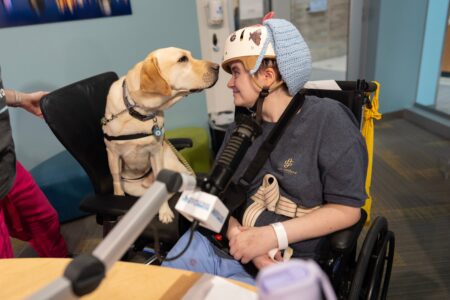
More children’s hospitals turn to furry caregivers to help kids heal
Sometimes ‘baby blues’ is actually something darker
Moments after Jenna Carberg gave birth to her daughter, doctors put the baby on her chest. “I felt a disconnect ...
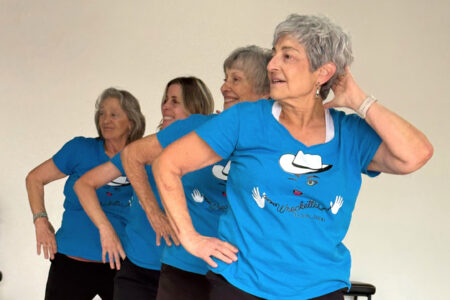
Moving to music offers all kinds of benefits as you age
Conflicting mamogram advice leads to confusion
WASHINGTON — Deciding when to get routine mammograms is confusing. Some health groups recommend women begin at ...