

Facial frequency
Non-surgical technique radios in on wrinkled skin
To Doreen Kuss, it’s all about preventive maintenance. She’s worked hard to keep her body fit and trim. Why not do the same with her face?
That would explain the series of surface laser treatments she’s received. And the Botox injections around her eyes.
Kuss, 45, was in Dr. Suzan Obagi’s Cosmetic Surgery & Skin Health Center in Marshall, Pa., recently to try one of the newest techniques on the market: the ThermaCool TC System. It aims to give the effect of a facelift without surgery.
The $30,000 device uses radio frequency energy to heat the under layer of the skin while cooling the outer layer. The heat causes the collagen to contract, then gradually tighten, which lifts the skin. The full effect is usually seen in four to six months, although some patients notice an immediate lifting.
Studies in which collagen has been heated for other purposes have shown the effect can last two years or more, said Edward A. Ebbers, vice president of Thermage Inc., which developed the device.
“That’s what makes this so exciting,” Obagi said. “We had nothing (non-surgical) that could tighten the skin and lift it.”
The whole process takes about three hours (a half-hour to an hour for the actual ThermaCool procedure), and patients can return to work afterward.
Still risks
Cleared by the Food and Drug Administration in November 2002 for the area around the eyes, the technique is being used for full-face lifting, as well as lifting skin on the upper arms, abdominal area and breasts.
Unlike chemical peels or lasers that are applied directly to wrinkles, ThermaCool works by tightening skin next to wrinkles, Ebbers said.
Production of collagen, the connective tissue that makes up 75 percent of the skin, stops at about age 20, Obagi said. From that point, most people lose 1 percent of their collagen each year. She suggests people start as early as age 25 on a preventive program to keep skin supple.
“I like the idea of being pre-emptive,” said Kuss, an artist who lives in Mt. Lebanon, Pa. “You feel like you’re ahead of the game.”
The former college conditioning coach has two sons, ages 22 and 24. She said she’s getting more comments from people remarking that she doesn’t look old enough to have grown children.
Obagi’s ThermaCool patients have ranged from their mid 30s to late 60s, although optimal ages depend on each individual, she said. Because men have thicker skin, they may be better candidates at an older age.
She said it’s critical that the procedure be done under a physician’s supervision.
“There are still risks involved with this. Not every patient is a candidate,” said Obagi, a dermatologist who received a fellowship in cosmetic surgery. “Not every patient is going to improve. If you select the wrong candidate, you will have a disappointed patient or have unwanted complications.”
Risks include blistering of the skin, which can cause scarring, or transient numbness. The procedure cannot be performed on people who have a history of seizures, have epilepsy or who have defibrillators or pacemakers.
Sensitive, but not painful
In her office, Obagi has trained Lynn Sullivan, an aesthetician, to perform the procedure. The doctor marks locations on the patient’s face where the device should be placed and then calibrates the energy level.
Some patients have the procedure just on the brow area, which costs $1,500. A full-face treatment, which Kuss received, costs $2,500. These are not covered by insurance.
On a recent Thursday, Kuss was in the office about 9:30 a.m. getting an anesthetic cream applied to her face. An assistant then placed clear plastic wrap over some portions to speed numbing and to enhance penetration.
After an hour, Obagi injected 12 nerve blocks about the face to further anesthetize the area. Sullivan rubbed on oil and applied a pink-purple grid transparency to her face to help ensure uniform treatment and to avoid duplicating areas, which can cause blistering.
Sullivan kept the ThermaCool tip on each section of the skin for about five seconds. Kuss said she felt a warmth and “glowing sensation.” There was more discomfort along the bone area than on fatty tissue.
“It’s like someone holding something hot on my skin,” she said. “There’s a peaking.”
The actual procedure took a little more than an hour. Afterward, her face was sensitive to the touch, but not in pain.
Kuss will return to the office in a month, and then again a few months later.
“You have to be patient,” the doctor said. “People peak four to six months later. That’s when you’ll get the best results.”
ThermaCool is offered by 168 dermatologists and other cosmetic specialists.
Health
Program that helped people with disabilities scrapped again
Margaret Tomlinson has been recovering from a traumatic brain injury for three years. Nearly a year ago, she moved ...
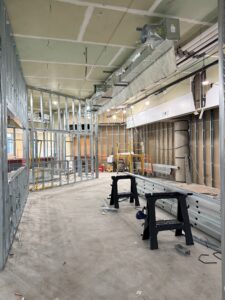
Excitement builds as LMH Health draws closer to completing Therapy Services renovations
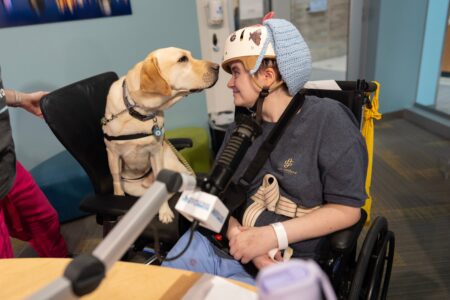
More children’s hospitals turn to furry caregivers to help kids heal
Sometimes ‘baby blues’ is actually something darker
Moments after Jenna Carberg gave birth to her daughter, doctors put the baby on her chest. “I felt a disconnect ...
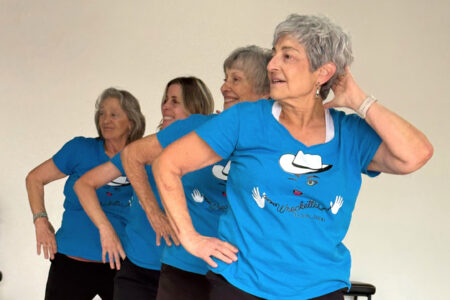
Moving to music offers all kinds of benefits as you age
Conflicting mamogram advice leads to confusion
WASHINGTON — Deciding when to get routine mammograms is confusing. Some health groups recommend women begin at ...