

Study says more serious diagnoses may follow skin cancer findings
Research keyed on females, but likely would apply to men, too, author says
Chicago ? Women with common, usually nonfatal forms of skin cancer face double the risk of having unrelated cancers, according to a large study, suggesting that the initial diagnosis may be more worrisome than previously thought.
The skin cancer link was found for several malignancies, including cancer of the brain, breasts, lung, liver, ovaries and uterus.
Previous studies have shown that men and women with skin cancer face an increased risk of skin cancer returning. Some studies also have found that people with nonmelanoma skin cancer are prone to later developing nonskin cancers.
But according to the new report’s lead author, Dr. Carol Rosenberg of Evanston-Northwestern Healthcare, part of Northwestern University’s medical school, the earlier research did not adequately consider other risk factors that might explain the connection.
Her study, involving 92,835 post-menopausal women participating in a continuing federal study, considered other factors that influence cancer risk — including smoking, weight and education level — and still found an increased risk of unrelated cancers associated with skin cancer.
Rosenberg said she suspects her results would also apply to men, since previous studies involved both genders.
Given previous research, the authors presumed that skin cancer preceded development of other cancers, though the study lacks information on which developed first, Rosenberg said.
The results appear in the January issue of Cancer, an American Cancer Society journal, being published online today.
Of the more than 85,000 women who did not have skin cancer, just over 11 percent, 9,927, reported having had other cancers.
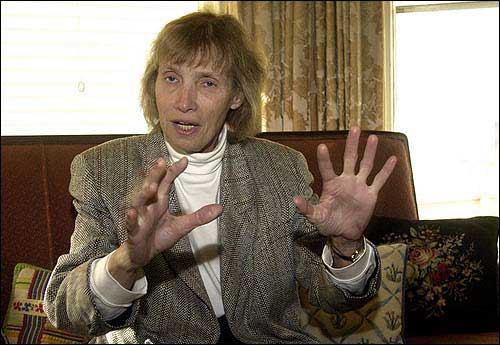
Luvie Owens, 70, of Winnetka, Ill., was a participant in a study suggesting that women with nonfatal forms of skin cancer double the risk of developing other unrelated cancers and implied that they should still be vigilant about getting routine screenings. Owens had a skin cancer lesion removed last year and since the study results has made an appointment for a colonoscopy.
Of the 7,665 women who reported having had a mild form of skin cancer, nearly 25 percent, 1,878, said they had also had other types of cancer.
The skin cancers implicated — basal cell and squamous cell — affect more than 1 million Americans each year. Those skin cancers grow more slowly than melanoma, the most serious skin cancer.
Eugenia Calle, the American Cancer Society’s director of analytical epidemiology, questioned whether the increased risk is as high as the study suggests, considering that earlier studies found lower risks.
Calle said the study design may have exaggerated the risk, since women with nonskin cancers might be more likely to remember having had mild skin cancer than women who have only had mild skin cancer, especially since it is often dismissed as a minor inconvenience, Calle said.
Health
Program that helped people with disabilities scrapped again
Margaret Tomlinson has been recovering from a traumatic brain injury for three years. Nearly a year ago, she moved ...

Excitement builds as LMH Health draws closer to completing Therapy Services renovations

More children’s hospitals turn to furry caregivers to help kids heal
Sometimes ‘baby blues’ is actually something darker
Moments after Jenna Carberg gave birth to her daughter, doctors put the baby on her chest. “I felt a disconnect ...

Moving to music offers all kinds of benefits as you age
Conflicting mamogram advice leads to confusion
WASHINGTON — Deciding when to get routine mammograms is confusing. Some health groups recommend women begin at ...