

Formula calculates risk of getting lung cancer
Washington ? How long and how much you smoked, and how long it’s been since the last puff, make a difference in the risk of getting lung cancer.
Scientists have come up with a formula that certain smokers and ex-smokers can use to calculate that risk — one that could help people decide if they really want a controversial test for lung cancer.
The formula, published in this week’s Journal of the National Cancer Institute, shows a wide variation in risk. Consider a 51-year-old woman who smoked a pack a day since she was 14 until stopping nine years ago. The formula puts her chances of getting lung cancer in the next 10 years at less than 1 in 100.
Compare a 68-year-old man who smoked two packs a day since he was 18 and hasn’t yet quit. He has a 1 in 7 chance of lung cancer by his 78th birthday if he keeps puffing. If he quit today, the risk drops slightly, to 1 in 9.
The formula only works for certain people — those older than 50, who smoked at least half a pack a day for at least 25 years — because it’s based on a study that tracked cancer development in just those people.
Researchers from New York’s Memorial Sloan-Kettering Cancer Center created the formula and posted a version on the center’s Web site, www.mskcc.org/PredictionTools/ LungCancer, on Tuesday.
Lung cancer is expected to kill 157,000 Americans this year. Until now, doctors could give only advice that smoking is the chief cause and that risk drops with each year that passes since kicking the habit.
The new formula will help doctors “be more specific now about who is at greatest risk,” said Dr. Tom Glynn of the American Cancer Society, who praised the research.
That’s particularly important as more people consider getting the still unproven spiral CT scans to hunt early lung cancer, Glynn said.
Only 15 percent of lung cancer sufferers survive five years, mainly because the disease usually is diagnosed very late. There is no proven screening test so far.
The National Cancer Institute is studying whether spiral CT scans, which view the lungs at various angles, could improve survival by spotting tumors early. There’s no answer yet, and the scans do have a big problem: Up to half detect harmless scar tissue or some other benign lump that requires a risky biopsy or other follow-up testing.
Health
Program that helped people with disabilities scrapped again
Margaret Tomlinson has been recovering from a traumatic brain injury for three years. Nearly a year ago, she moved ...

Excitement builds as LMH Health draws closer to completing Therapy Services renovations
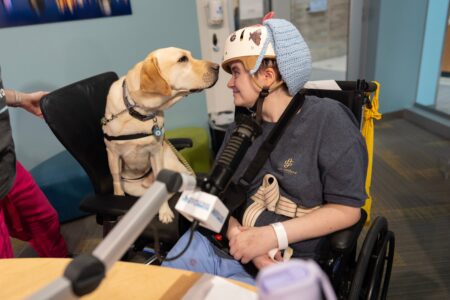
More children’s hospitals turn to furry caregivers to help kids heal
Sometimes ‘baby blues’ is actually something darker
Moments after Jenna Carberg gave birth to her daughter, doctors put the baby on her chest. “I felt a disconnect ...

Moving to music offers all kinds of benefits as you age
Conflicting mamogram advice leads to confusion
WASHINGTON — Deciding when to get routine mammograms is confusing. Some health groups recommend women begin at ...