

Strike fuels bicycle boom
Caracas, Venezuela ? In a holiday shopping season made dreary by Venezuela’s general strike, one item was — and remains — particularly hot:
The bicycle.
Before the strike, streets in the capital were usually choked with beat-up buses, taxis, cargo trucks and cars, and a gasoline shortage in this oil-rich nation seemed unthinkable.
But the Caracas traffic jams and the gasoline vanished when Venezuela’s largest labor union and business chamber began a general strike Dec. 2 to demand President Hugo Chavez’ resignation.
While motorists wait to fill their tanks in milelong lines outside service stations, bike stores have been swamped as Venezuelans adopt an alternate form of transportation.
Frank Gonzalez, co-owner of a store in Caracas’ upscale Las Mercedes district, said he’s never seen such a spike in year-end sales.
“We are selling three or four times as many bikes as we did last year. The demand is incredible. I’ve never seen a boom like this,” said Gonzalez, smiling. His store was bustling with activity.
“What’s happening is great for us, but it’s terrible for the country,” said Gonzalez’s business partner, Mauricio Racchini.
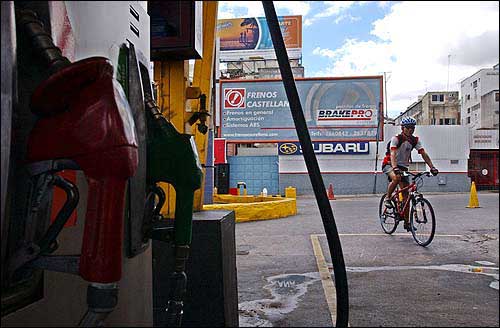
A cyclist passes a closed gas station in Caracas, Venezuela. A nationwide general work stoppage, entering its second month, has paralyzed Venezuela's oil industry. Due to the shortage of gasoline and long lines at gasoline stations, Venezuelans are adopting bicycles as an alternative form of transportation.
Under normal circumstances, bike sales usually double during the holiday season. But in 2002, sales soared well beyond that, thanks mostly to middle-class Venezuelans with money to spare from year-end bonuses, store owners said.
“Sales are up 300 to 400 percent this year, almost all of it bikes … and some in-line skates,” said Javier Rodriguez, owner of a sports store selling everything from top-of-the-line mountain bikes to used surfboards.
Biking quickly became fashionable at opposition-led marches and street demonstrations. If protesters aren’t walking, they’re usually pedaling.
“It’s fun protesting and riding at the same time,” said Patricia Rago, a 39-year-old economist. “Besides, this is a great way to get exercise.”