

So much pressure
Slimming down curves can carry risks
More people are beginning to wonder if an obsession with thinness is unhealthy for family members and friends, particularly young women.
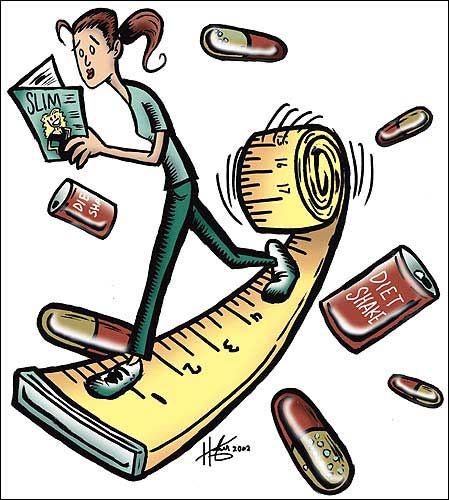
Any mother of a young girl can tell you: Being thin is fashionable. From Diva Starz dolls to models in magazines, the message is thinner is better.
“Just sit in the front seat of my car and listen to what gets discussed in the back,” said Jeannie Elbert, a carpooling Wichita Falls, Texas, mother of 8- and 11-year-old girls. “They talk about who’s fat, and sometimes it’s a little girl who I don’t think is that heavy.”
Elbert’s right. Physicians are hard-pressed to apply strict weight guidelines because girls have height spurts between 10 and 12 years and boys between 12 and 14. Weight gain comes after.
“There are surveys right now that show 80 percent of 10-year-olds are afraid of being fat,” said Sabina Cotter, outpatient dietitian at United Regional Health Care Systems in Wichita Falls. “That they are worried about it this young should be a red flag to parents.”
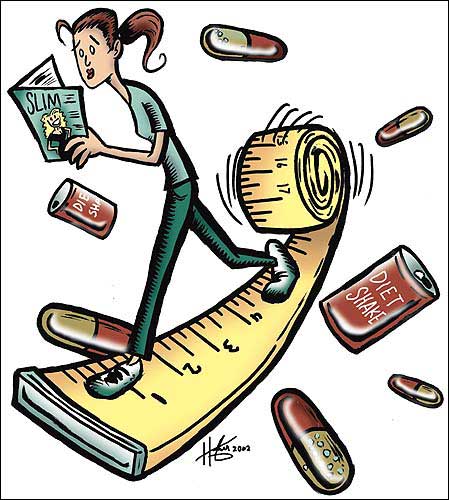
By their late teens and through their early 20s, the persistence of being underweight can spell trouble. Chronically thin women may find it difficult to become pregnant.
“When a woman’s percentage of body fat drops below a certain minimum, her body doesn’t produce the levels of hormones necessary for ovulation,” said Akashia Anderson of Vanderbilt University.
“Rapid weight loss and undernourishment leads a woman’s body into a state of emergency, and she will not menstruate if she is barely surviving.”
Furthermore, the increased risk of developing osteoporosis from years of inadequate nutrition and the tendency of underweight patients to have poor resistance to illness sooner or later add up to higher health costs.
“I have been working with young women who have, in a couple of cases, almost starved themselves to death,” Cotter said. “Hospitalization can be costly, but with so many risks added by being underweight, it won’t get any cheaper.”