Mars, Earth get close encounter
Astronomy fans prepare for rare sky view
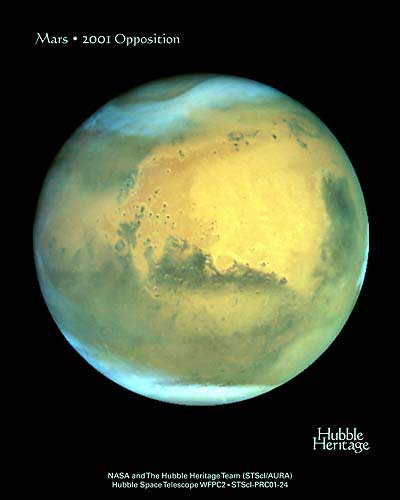
Bill Remmers has been looking through telescopes for more than 50 years, but he’s rarely seen a heavenly body look as striking as Mars did last weekend.
“It was an absolutely wonderful sight,” he said. “It was the best I’ve ever seen Mars. There was a lot of surface detail.”
The view will get even better next week.
Early Wednesday — at 4:51 a.m., to be exact — Mars will be a mere 34.6 million miles from Earth, the closest it has been in 60,000 years. If that doesn’t sound close, Mars was five times as distant just six months ago.
The close pass has astronomers buzzing about their hobby, which some say has seen a resurgence in recent years.
“We’re at a bit of a peak right now, mostly because of the incredible advances in academic astronomy,” said Gary Webber, another amateur astronomer in Lawrence. “This is a renaissance age in astronomy. More things have been found in the last 20 years than in all the time before that. It’s a golden era of astronomy.”
Every 17 years
In some ways, Mars’ close pass to Earth isn’t remarkable. It gets nearly this close every 17 years. But because of the planets’ elliptical orbits, they’re slightly closer this time around, and won’t be this close again until 2287.
Bruce Twarog, professor of physics and astronomy at Kansas University, isn’t surprised Mars’ proximity to Earth is getting so much attention.
“People tend to focus on the extremes in astronomy,” he said. “They look at the fastest objects, the biggest objects. Because it’s so bright, Mars sticks out like a sore thumb.”
His wife, Barbara Anthony-Twarog, another astronomy professor, said the fascination with the red planet went beyond Martian invasion movies.
“It apparently had water in its past history,” she said. “It tells us something about what could happen to Earth, with long-term climate evolution. Do we want to coast along or do something to understand and protect the environment?”
Renewed spark
The Mars event apparently has sparked new interest in astronomy in Lawrence.
At Image Works — a camera shop at 23rd and Louisiana streets that is one of a handful of stores in Lawrence that carry telescopes — business has picked up.

Employee Mike Lee, himself an amateur astronomer, said the store had sold eight telescopes in the past two weeks.
“Normally we don’t sell many,” he said.
Astronomy Associates of Lawrence, a local skywatching club, is planning a Mars-watching event from 10:30 p.m. Wednesday to 1:30 a.m. Thursday at Lindley Hall at KU.
Bruce Twarog said the group would use the 6-inch Clark refractor telescope at Lindley Hall for the event. Constructed in 1885, the telescope isn’t used often by KU, he said. It’s too cumbersome to operate and more modern technology allows better viewing from smaller telescopes, he said.
Astronomy Associates and KU faculty members now use the roof of Memorial Stadium for most of their viewing.
Steve Shawl, another KU astronomy professor, said they’d like to construct an observatory in the country — if the money were available.
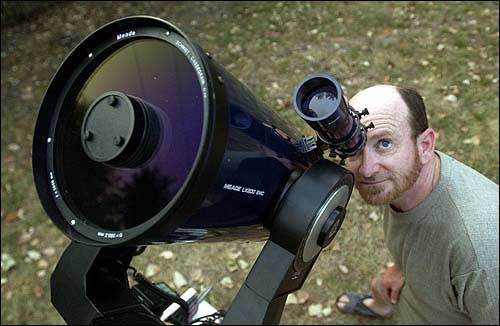
Gary Webber, an amateur Lawrence astronomer, uses his 8-inch telescope to gaze at distant galaxies and photograph them. He's looking forward to getting a good look at Mars next week, when it will make its closest pass to Earth in 60,000 years.
Light pollution
Part of the reason they’d like to get out of town is light pollution.
In some ways, lighting has improved in town. Mercury lighting has given way to low-frequency sodium lights that are easier for astronomers to filter out.
But as Lawrence grows, so do the number of lights.
The issue was discussed last month by Douglas County commissioners considering whether to allow a brightly illuminated flag at Heritage Baptist Church northwest of Lawrence. The commission eventually allowed the lights, which can be seen for miles.
“Light pollution is a real problem,” Shawl said. “It’s very disappointing that the local government is allowing more light pollution to occur. I think one of the fundamental human rights, in addition to food and water, is the ability to see the sky.”
Webber has considered lobbying the City Commission and County Commission for stricter laws governing lighting, but he’s not sure they would be approved.
“It’s seen by many people as an infringement on their civil liberties and property rights,” he said.
‘Once in a lifetime’
Amateur and professional astronomers in Lawrence say they look at everything in the sky.
Webber focuses on photographing galaxies and star clusters. In 2001, he became the first human to photograph a supernova. Many similar contributions to astronomy are made by amateurs, he said.
Bruce Twarog worries that high-quality images seen from orbiting telescopes will discourage people from going in their back yards and viewing the sky with telescopes on their own.
But Webber said the quality of equipment available to amateurs had gone up as the price fell, giving more people a chance to see things from the ground they could not have seen until recently.
“The setup I have (which cost about $10,000) is comparable to what professional observatories had 30 years ago,” Webber said.
And Webber said he got a thrill from doing the work himself, instead of seeing NASA images.
“I think an amateur observer will tell you there’s something different about seeing the photons enter your eye and seeing things real-time, even if it’s just a little fuzzy dot,” he said. “Those particles had to travel millions of years to reach your eye.”
That’s exactly what Lee, the Image Works employee, plans to do next week. He’ll take a telescope to Clinton Lake overnight Tuesday to watch Mars.
“I’ll never, ever get a chance to see it like this in my lifetime,” he said. “One night of no sleep is worth seeing a once-in-a-lifetime event.”
City Government
The flip of a switch — and a year’s worth of work behind the scenes — get city’s holiday lights shining
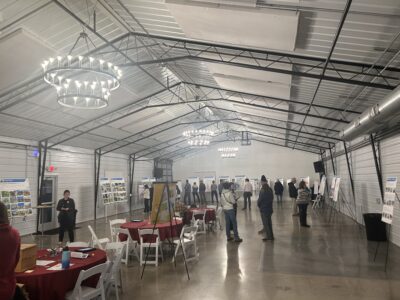
City officials working on North Lawrence study said public input ensures final result reflects local needs
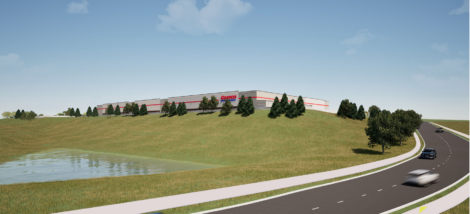
Planning Commission approves a first step to allow for development of Costco in west Lawrence
Commissioners pledge $80,000 to assist loft project in East Lawrence on condition it has more affordable units
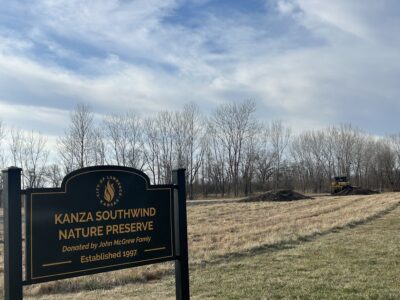
Crews build temporary road through southwest Lawrence preserve for sewer project to surprise of some residents