

Deficit-ridden states eye service taxes
COLUMBUS, OHIO ? Mike Hardesty has spent nearly $1,000 on tattoos, including a dragon on his right arm and a couple of Harley-Davidson designs. He doesn’t like an Ohio plan to start taxing tattoos.
“It just never has been in the past, so why start now?” said Hardesty, 47, who builds custom motorcycles. “We pay tax on everything else.”
At least 18 deficit-ridden states are so desperate for money that they are seeking to either boost their sales tax or extend it to goods and services — from tattoos to manicures to wheelchairs — that until now have been left untouched. Health spas, farm equipment, pest control, even prosthetic devices — all could soon be subject to a raft of new taxes.
Tax supporters say the economy has changed since the first sales taxes were imposed in the 1930s, and services make up a bigger chunk of consumer spending than goods. Ohio Tax Commissioner Tom Zaino said national spending on services climbed from 40 percent in 1959 to 58 percent in 2000.
“There’s a lot of thinking going on about how our tax systems are designed and where our economy activity is and what taxes are based on,” said Alysoun McLaughlin, a tax policy specialist with the National Conference of State Legislatures. “As the economy is moving increasingly toward a service economy, it’s a logical place for states to look.”
The proposals come as many states face their worst financial crisis in 60 years; 36 have budget gaps this year, according to the national conference.
In Nebraska, lawmakers may extend the 5.5 percent sales tax to a number of services, including labor on car repairs.
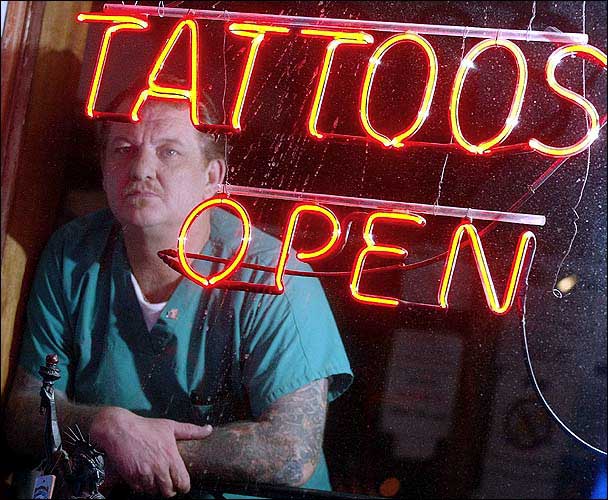
Tattoo artist Jan Gawronski, of Columbus, Ohio, opposes a proposed state tax on tattoos. At least 18 deficit-ridden states may boost sales taxes or extend them to goods and services.
The unevenness of the tax system frustrates Dan Blackburn, who owns a Fremont, Neb., service station. If the tax extension is approved, customers will pay an additional $8.40 in state and local sales taxes for the $120 in labor it costs to fix an oil leak.
“It’s so hard to keep straight what they want taxed and don’t want taxed,” said Blackburn, 38. “It would simplify things if they just taxed everything.”
Besides services, some states may begin collecting taxes on previously exempt goods. In Kansas, there’s a plan to tax the sale of prosthetic and orthopedic devices such as walkers and wheelchairs.
Extra money from raising sales taxes makes them more appealing than other tax changes, said Harley Duncan, executive director of the Federation of Tax Administrators.
Closing loopholes in business taxes, by contrast, simply recoups money lost over time as companies have found ways to lower their tax bill, Duncan said.