

Trick-or-treaters beware
Fancy contacts found to be dangerous, doctors say
You’ve got your Halloween costume planned right down to the smallest detail your eyes. Those bright red, special-effects contact lenses you picked up last weekend at the flea market are sure to make you the scariest devil at the party.
But unless you really want this to become a Halloween to remember, you may want to forgo the lenses. Contacts need special care, and wearing bootleg lenses that have not been approved by the U.S. Food and Drug Administration or prescribed by an eye doctor can endanger vision, sometimes permanently.
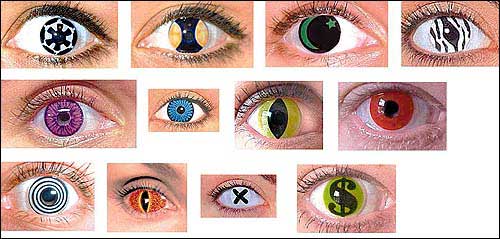
Youths across the country, driven by cheap prices and the desire to look their best or their weirdest, have started wearing colored contacts, ranging from natural shades of green and gold to not-so-natural purples and even designs like zebra stripes, flowers and the logos of their favorite NFL teams. The fad peaks around Halloween, when special effects are a must.
Sara W., 15, of Bethesda, Md., wanted green contacts because “there are so many blond-haired, blue-eyed people, and I wanted to be different. It didn’t seem like it would take that much effort, and it would really change my whole look. Eyes are like your focus; that’s where people look when they talk to you.”
Kaya F., 15, of Grafton, Mass., alternates wearing gray-, honey- and blue-colored contacts over the naturally dark eyes she inherited from her father.
“My mother is Scottish, so blue and green eyes run in her family. And (with contacts), I can have light eyes like her side of the family. Most people notice about 15 minutes into a conversation. (The colors) look natural but shocking, and (they) make my skin look more golden,” she said.
Not everyone is excited about the ability to change eye color in an instant, though. Doctors are concerned that improper care of lenses will lead to infections and even blindness. Last year, according to a report by ABC News, 1,500 people ended up in the emergency room with contact lens-related injuries. With Halloween around the corner and an abundance of tempting designs available, including spider webs, bloodshot eyes and dizzying spirals, experts fear that number will increase.
And although many reputable optical shops sell special-effects lenses, some kids are engaging in unsafe practices, such as buying contacts from places like the corner grocery store, borrowing other friends’ lenses, even dyeing lenses in Kool-Aid.
“Kids might not realize the risk of taking a lens out of their eye and giving it to the kid sitting across from them,” said Dr. Thomas Steineman, director of the Metro Health Medical Center eye clinic in Cleveland. “You wouldn’t think about sharing a toothbrush; why would you trade your contact lens?”
Lenses can become infected with harmful bacteria and microorganisms. When Robyn R., 14, of Cleveland came to Steineman’s clinic last year with an eye infection after wearing colored contacts she bought from a video store, the infection was so severe that she was hospitalized in intensive care for four days.
Eight months later, the infection was gone, but scarring left Robyn’s vision blurry. Steineman performed a cornea transplant to fix her vision, but Robyn will have to put in eye drops and have regular eye exams for the rest of her life.
Betsy van Die of Prevent Blindness America says another problem with bootleg lenses is kids who wear them probably haven’t talked with an eye doctor and most likely don’t know how to properly clean the contacts.
“If someone has a vision problem and wears contacts, then generally they take more care than someone who is just popping something in their eyes as a cosmetic thing,” van Die said.
Still, young people may be willing to risk infections just to look cool. John H., 19, of Lancaster, Pa., recalls a tennis teammate who wore iridescent purple contacts. “Not every kid can pull it off fashionwise, but he was the Eminem of the team,” John said.