

Iraq inspections round set, including presidential sites
Baghdad, Iraq ? “Business-like” talks with Iraqi officials have set the stage for a decisive new round of weapons inspections starting next week, including possible unannounced drop-ins on President Saddam Hussein’s palaces, the chief U.N. inspectors said Wednesday.
“The world and the Security Council want assurances that Iraq has no more weapons of mass destruction,” the chief of the U.N. inspection team, Hans Blix, said on a stopover in Cyprus after wrapping up two days of talks in Baghdad.
An Iraqi vice president said the Baghdad government will cooperate fully with the inspectors, but he warned the Americans against inserting spies into the inspection teams.
In the Czech Republic, where he was attending a NATO summit, President Bush also struck a combative note on Iraq, playing down the importance of the inspectors’ return to Baghdad, and again threatening military action if inspections don’t work.
“People tend to focus on the inspectors as if the inspectors are the end,” Bush told reporters. What’s important, he said, is eliminating any weapons of mass destruction in Iraq. “He’s going to disarm,” he said of Saddam, “one way or the other.”
The U.N. teams are returning to Baghdad under a new U.N. Security Council resolution describing the inspections as a “final opportunity” for Iraq to meet its post-Gulf War obligations to give up any chemical, biological or nuclear weapons.
As the chief inspectors left, 20 U.N. staff members got down to basics: Floors were washed and telephone lines connected as they readied the inspectors’ former offices for their return after a four-year absence. A “hotline” phone link to key Iraqi officials was in the works.
The staff doubled with the arrival Wednesday of more technical support crew. The first main contingent of weapons inspectors arrives Monday, and the first field inspections are expected two days later.
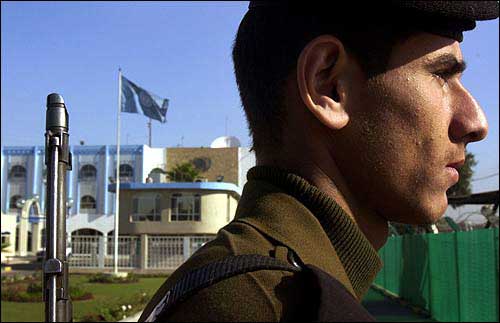
An Iraqi soldier guards the United Nations headquarters in Baghdad. UN chief weapons inspector Hans Blix and other U.N. officials on Wednesday ended a preliminary two-day visit to Iraq in which they discussed weapons inspection process with Iraqi officials. Inspectors will return Monday to Baghdad, and inspections should begin a couple of days later.
A dispute over Saddam’s “presidential sites” contributed to the breakdown in the U.N. inspections regime in December 1998. The Iraqis had obstructed visits to a few compounds they designated sensitive, until a compromise arrangement allowed inspections with notification and a diplomatic escort.
The new council resolution ignores those arrangements and demands full, unfettered access to all sites.
The seven-year inspection regime in the 1990s dismantled Iraq’s nuclear program before it could build a bomb, and destroyed large amounts of chemical and biological weapons and longer-range missiles forbidden by postwar U.N. resolutions.
But some chemical weapons in particular were believed never destroyed, and U.S. intelligence reports suggest the Iraqis may have rebuilt some weapons programs since the inspectors pulled out in 1998.
The council resolution requires the Iraqis to report by Dec. 8 on nuclear, chemical and biological programs, including any activities linked to weapons.
In an interview with the Lebanese Broadcasting Corporation-International, Iraq’s Vice President Taha Yassin Ramadan said Iraq would cooperate fully, but that if inspectors’ demands were clearly aimed at gathering intelligence unrelated to weapons of mass destruction, “we will act in such a way so as to safeguard the country’s sovereignty and security.”
Iraqi allegations that American spies had infiltrated the inspectors’ organization in the 1990s were another contributor to the collapse of inspections. Ex-inspectors later backed up those Iraqi allegations.