

Mexican women’s effort dries up liquor
San Rafael Tampaxal, Mexico ? As the Corona beer truck with its clinking bottles lumbered into this Indian village in the mountains of central Mexico, angry women ran out of their homes, shouting: “Get out! Get out!”
The women, many carrying babies in colorful shawls tied around their hips, forced the driver back down the mountain before he could unload a single bottle — much to the chagrin of their husbands.
Fed up with their men stumbling home drunk or falling over in a stupor in their cornfields, the women of this remote Indian village in San Luis Potosi state took matters into their own hands, refusing to allow any more alcohol to be sold in their community of 250 people.
Huasteco women — whose customs don’t allow them to own land unless they are widowed or orphaned — traditionally don’t drink alcohol and rarely hold positions of power.
The women’s defiance has spread like wildfire through these lush mountains. Since their bold stand more than a year ago, women in at least 10 Huasteco Indian villages have gotten their leaders to ban alcohol and another dozen communities are considering it.
“A lot of men are not happy with this,” said Marcelina Martinez, who helped turn back the truck from San Rafael. “They seem sad. But, oh well. At least now they spend time with their families, so in the end things are better. They didn’t want to listen to us, so we had to get angry.”
In the past decade, Huasteco women have taken on a greater role in their communities as more men leave to find work, often in the United States.
Many women now manage the family budget — something that may have led to the alcohol bans, some say. The region relies heavily on coffee, and growers are earning much less amid plummeting world prices.
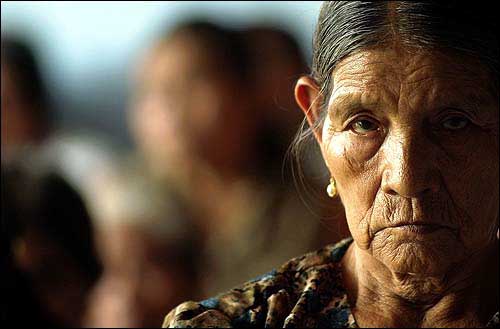
Maria Mendez listens as the women of her Huasteco Indian village of Las Armas, Mexico, stage a meeting about banning alcohol. In the past two years, women in at least 10 Huasteco Indian villages have gotten their leaders to ban alcohol; another dozen communities are considering it.
Women said they also found support from the region’s new government. President Vicente Fox’s National Action Party took power in the Huasteco Indian’s most populous municipality, Aquismon, two years ago and has cracked down on moonshine.
The cane-based liquor, known as aguardiente or yuco, flows like the rivers through these mountains, which are surrounded by sugarcane fields. A popular Huasteco song proclaims aguardiente the best liquor because all get drunk — including the mayor and even the governor.
Liquor is an integral part of Indian ceremonies in Mexico. Like many tribes, Huastecos pour alcohol on the ground as an offering to Mother Earth before planting. At festivals honoring each village’s patron saint, men dance to the traditional music of violins and guitars and then drink until dawn.
Women rarely drink, even at festivals, but they recognize alcohol as an important part of their traditions. Because of that, most dry towns lift their bans during celebrations. Some even allow families to serve liquor at birthday parties and weddings.
Still, women say their bans have made a difference. As darkness fell over San Rafael, young men sat on the main plaza, chatting and chugging Coca-Colas.
“My husband now is home early instead of stumbling in at 2 a.m. or falling over drunk on the floor in the local store, where I used to find him,” Martinez said, washing clothes outside her thatched-roofed hut. “The beer truck still passes by, but it never stops here. I think the driver is scared of us.”