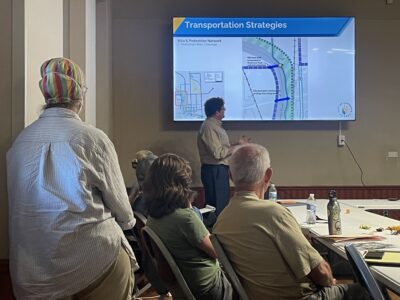
Who pays for growth?
Developers, land owners share costs
Building in Lawrence isn’t just a matter of putting up a house, a store or an apartment building.
There are connections with water, sewer and electric lines to be made, streets to carry traffic to and from the site, trees to be planted and street signs to be installed all mandated by the city. Many of the specifics can be found in Chapter 21, Article 7, of the city code. It’s available online.
The city has development policies that govern who will pay for what when development occurs in Lawrence. Officials say the burden falls largely on developers.
“I think the general philosophy that is reflected in the … policy is that the property owner, the developer is responsible for all the costs of public infrastructure to their site, and the city pays for the costs associated with maintaining the entire system,” said Assistant City Manager Dave Corliss.
The split of responsibility is why the developer of a residential subdivision will probably pay the entire cost of putting in streets which are “collectors” that connect neighborhood residents to the rest of the city while the city and commercial developer might share the costs of an “arterial” road that needs to be improved because of a new store, but which will carry plenty of other traffic as well.
‘The big question’
An example of both situations is the Home Depot store slated to begin construction at 31st and Iowa streets this spring. The city and the store are splitting the cost of improving the already-busy intersection, which will need to carry more traffic because of the new development.
But a block away, Home Depot is shouldering the entire cost of building a new section of Ousdahl Road north of 31st Street, which will be used mainly by the store’s customers and suppliers.
So does growth in Lawrence pay for itself, then?
“I think that’s the big question,” Corliss said.
Developers think so, at least as far as residential development is concerned. The Lawrence Homebuilders Assn., hoping to avoid the imposition of new “impact fees,” did a study a year ago suggesting that, after development fees, sales and property taxes are added up, taxpayers bear little of the cost of building a new housing subdivision.
“It’s not even close to not paying for itself,” said Lee Queen, a member of the association’s board. “The city doesn’t pay for hardly anything. I’m not complaining, but that’s the way it is.”


Lawrence City Commissioner Mike Rundle isn’t so sure.
“I think the jury’s still out,” he said.
An added burden?
Rundle and other critics say development doesn’t necessarily pay for itself, because costs are more than just the streets and sewers. There’s often an added burden to the school system if families bring children with them to the new houses, and a growing population that fills those new houses also puts a greater demand on local governments for other services.
“I suspect that, just like everywhere else, I’m pretty sure that if you put all the legitimate costs into the equation, growth isn’t paying for itself,” Rundle said.
It is a debate that isn’t easily resolved.
“I think the key question is if the policy reflects our community’s and our (city) commission’s desires of how to approach this issue,” Corliss said.
It’s a question that should be answered soon.
The city has hired a consultant, Duncan and Associates, to look at the city’s growth policies to see if there are ways to better guide and control the city’s growth.
One potential option: The city might decide to go ahead and build streets, sewers and other infrastructure to areas where it wants and expects growth to happen, instead of letting developers put those services in when they want to start building. Developers would be charged for those improvements when the buildings went up.
The consultants’ report is due this spring. Whatever the results of the debate, Corliss said Lawrence is better off dealing with the challenges of growth instead of decline.
“This is a good challenge to have,” he said. “We’re fortunate, but we want to make sure we grow in a quality way.”
City Government
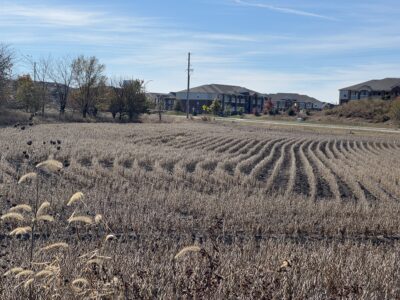
Developer seeks incentive from City of Lawrence to build 131 units of housing near Wakarusa and Queens

Lawrence city leaders will consider whether to keep Community Building open, make 2 other rec centers free to access
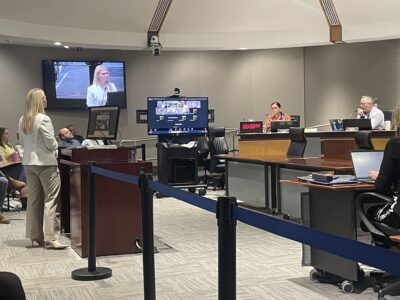
A STAR Bond application raises questions for city leaders about Costco and housing west of the SLT
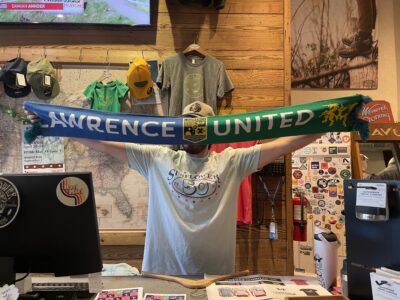
Soccer gear honoring Lawrence history’s all-star team is now on sale as part of city’s public art exhibition
To honor public servants, Lawrence’s July 4 celebration will have a whole gallery of their photos on display; submissions open now