


Report raises questions about synthetic blood tests, like one conducted in Douglas County
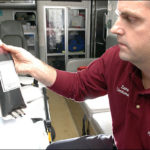
photo by: Scott McClurg
Lawrence-Douglas County Fire & Medical paramedic Lt. Zane Morgan holds a unit of PolyHeme, a synthetic blood that is in trials across the country and is being carried in six of the department's ambulances. The product carries oxygen that could be of great benefit to trauma victims.
The Associated Press is reporting that testing of synthetic blood replacements at hospitals around the country “may have led to unnecessary heart attacks and deaths.” One such study was conducted aboard Douglas County ambulances in 2006.In that test, PolyHeme was placed on ambulances in Douglas County and administered to patients who hadn’t signed up for opt-out bracelets.The AP says:_The U.S. Food and Drug Administration fell short, the report contends, even as red flags popped up during studies by five biotech companies. Rules barred the agency from releasing company trade secrets, and that kept some information hidden and may have led to unnecessary heart attacks and deaths, wrote the authors, who are government scientists and consumer advocates._”There shouldn’t be secret science,” said the lead author of the report, Dr. Charles Natanson, of the National Institutes of Health Clinical Center. Safety data need “to be made public expeditiously so science can build on the mistakes” of previous research, he said.The report, being published online Monday by the Journal of the American Medical Association, is the latest analysis of the risks of blood substitutes, which have been in testing for more than a decade.It was written by scientists with the NIH Clinical Center and advocates with the watchdog group Public Citizen. The clinical center in Bethesda, Md., seeks to ensure the safe and ethical conduct of clinical research.A safe replacement for blood would be a breakthrough for medicine and a big money-maker for companies that produce it. It could save lives on battlefields. Unlike ordinary blood, it could, theoretically, be stored for years without refrigeration. It also would work with any blood type and would not carry infections like hepatitis or the AIDS virus.By the end of 2000, a dozen studies of blood substitutes had been completed. By then, FDA officials would have known enough about cumulative risks to put a halt on further experiments, the JAMA report contends.But the FDA looked at each product and each use separately – in surgery, in trauma, in stroke patients – rather than pooling the results to get a fuller picture of the risk, Natanson said.The studies were particularly controversial because patients were often administered the synthetic blood when they were unconscious and unable to consent to their participation. There were also [reports of deaths at the time][5].The survey was conducted by Kansas University Hospital and involved ambulances in Douglas, Wyandotte and Leavenworth counties. A hospital spokesman couldn’t immediately comment Monday morning but expected to have something to say later this afternoon. [3]: