Archive for Sunday, October 18, 2009
Farmers rush to harvest corn
Mark Boyle takes a look behind the scenes on a farm during fall harvest. Farmers are working endlessly to get their corn ready for Thanksgiving.
October 18, 2009
Advertisement
Editor’s note: Reporter Mark Boyle takes us behind the scenes of news stories in the area. This week, he catches up with a local farmer who is in the process of fall corn harvest. With the wet weather this year, some farmers have been held back from harvest, creating a late rush at the grain elevators.
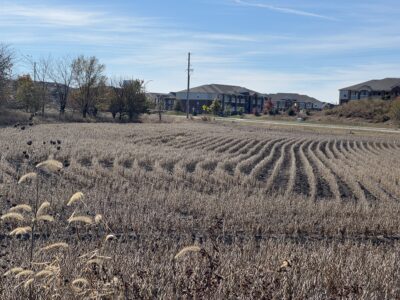
Area farmers are working fast and furiously to get their corn fields harvested before their Thanksgiving Day goal. Wet weather has made this year’s harvest both more difficult and delayed.
Stephen Tuttle farms thousands of acres throughout Leavenworth and Wyandotte counties and says there’s always an obstacle to clear — but that’s just life as a farmer.
“Mother Nature always tries to throw something at us,” Tuttle said. “We always seem to find a way to adapt.”
Tuttle began his farming operation in the late 1970s after he used his college money to buy some farm equipment. Now, some 30 years later, Tuttle Farms is vast and uses some of the industry’s most state-of-the-art equipment.
“I started with a 1969 model that we bought used and now we have this newer, modern equipment,” Tuttle said. “We can cut about 10,000 bushels a day, we got GPS on it and also a moisture and yield monitor. (It) also records everything to a data card that I can take home and download to the computer and print maps and gather my information from the fields.”
Tuttle says the American farming industry could be in for a crisis if younger people don’t get into the agriculture. The average age of the American farmer is nearly 60, and Tuttle believes that number needs to change for the nation’s agricultural success to continue.
“It’s going to be a crisis here coming down the road as everybody ages and gets older,” Tuttle said. “The problem has been consolidations. Larger farms seem to get larger, which gets into an area where the younger farmer can’t do it. The capital investment is astounding, so it would be very difficult for a young person to start.”
I not only learned about the past, present and future of the industry, but also some fun facts about corn as well.
“(An ear of) corn always has an even number of rows around it,” Tuttle said. “Usually they average 14 to 16 rows around and then they will be around 40 to 45 kernels long, so an average ear will have about 550 to 600 kernels. And there are 90,000 kernels in a bushel.”
Spending an average of 12 to 14 hours per day farming seven days per week, Tuttle says he enjoys what he does and has even had some people stop and show their appreciation. “We’ve had people that I don’t even know who they were stop in and say thanks. They said thanks for what you do, and I never see them ever again in my life, so it’s kind of nice that they feel that way.”
According to the 6News weather center, the area has received 40.11 inches of rain this year. That is 6.3 inches above the normal rainfall totals.
More like this
- Bountiful wheat crop: As harvest winds down, farmers worry about beans, corn June 29, 2006
- LOCAL HARVEST DESCRIBED AS LACKLUSTER October 2, 1991
- Drought conditions take toll on state's fall crops August 9, 2003
- CRUCIAL TIME APPROACHES FOR FARMERS September 7, 1997
- Area wheat harvest expected to be early, above average June 4, 2003
Top ads RSS
- Now Hiring Experienced Sales People $9/hour + commission + bonus ...
- Research Assistant KU Requires bachelor's degree in biochemistry, chemistry, molecular ...
- ADMINISTRATIVE ASSISTANT Fundraising and public relations firm seeking full-time administrative ...
- KU Informational Systems
- Floor Tech/Floater Sun.-Thurs., 2-4 hrs. per night, start at 5:00 ...
Marketplace
Arts & Entertainment · Bars · Theatres · Restaurants · Coffeehouses · Libraries · Antiques · Services
- Dropping home values may not accurately reflect market November 25, 2009 · 35 comments
- Quiet revolution taking place in America November 25, 2009 · 110 comments
- Lambert performance causes stir November 25, 2009 · 41 comments
- Local residents work together to make donation to Locks of Love November 25, 2009 · 4 comments
- Blog: How Has Obama's Stimulus Helped You? November 21, 2009 · 42 comments
- 100 years ago: KU fans looking forward to Missouri game November 25, 2009 · 1 comment
- Turbine manufacturer passes on Lawrence site November 24, 2009 · 71 comments
- On the street: Is Thanksgiving your favorite holiday? November 25, 2009 · 42 comments
- Stay or leave? It's business as usual for Mangino in wake of probe November 25, 2009 · 37 comments
- Blog: Tasering Your Preteen: Can You Imagine? November 24, 2009 · 68 comments
- Former KU Chancellor Laurence Chalmers dies November 25, 2009
- Research: Giving thanks brings health, happiness November 25, 2009
- Cornish hens: a special little meal November 25, 2009
- KU says student didn't follow proper lab procedures before exposure to toxic chemical November 25, 2009
- Haskell freshman dies in Montana jail November 24, 2009
- Message warns students at Perry-Lecompton not to attend class today April 20, 2007
- Former OU basketball coach Billy Tubbs to speak at Lawrence Chamber of Commerce meeting November 24, 2009
- City gives signal for traffic lights November 25, 2009
- Turbine manufacturer passes on Lawrence site November 24, 2009
- Stay or leave? It's business as usual for Mangino in wake of probe November 25, 2009


18 October 2009
at 12:12 p.m.
Suggest removal
Permalink
Seamus (Anonymous) says…
It's important to get the corn harvested before there is any threat to the all-important corn syrup supply. And our cattle need to eat as well, better get them fattened up with something they were never meant to eat! And, oh yeah, we need to power our cars with corn squeezings as well…
18 October 2009
at 3:23 p.m.
Suggest removal
Permalink
Yawnmower (Anonymous) says…
^ thanks for the input Debbie downer.
I'd like to learn to farm like that. Impressive technology.
18 October 2009
at 4:15 p.m.
Suggest removal
Permalink
introversion (Anonymous) says…
“We’ve had people that I don’t even know who they were stop in and say thanks. They said thanks for what you do.”
What Mr. Tuttle does that people thank him for is growing a commodity. There's this enormous misconception that commodity farmers are some kind of pedestal-worthy farmers who feed hundreds (or at least 128 plus you) with all the food they grow. I wonder how much of the corn that Mr. Tuttle grows ends up on his plate. Likely none, because Mr. Tuttle does not grow food. He grows a commodity that is bought by the government from farmers like him with welfare checks and then it is traded publicly.
Each person in the world could grow enough food for themselves to stay well fed on one acre of land. Mr. Tuttle grows his commodity crops on thousands of acres.
Think of all the food that our farmer friend could actually be growing and how many people he could actually be feeding if he was growing actual food and not a commodity.
18 October 2009
at 6:17 p.m.
Suggest removal
Permalink
Seamus (Anonymous) says…
Most of the field corn ends up in the bellies of cattle which results in them having terrible ulcers. Cattle were meant to eat grasses, not grain. The rest is used for industrial purposes, ethanol (to use in those FlexFool SUVs) and corn syrup.
18 October 2009
at 6:31 p.m.
Suggest removal
Permalink
JackRipper (Anonymous) says…
Sadly look at most farmer's today. After sitting in a tractor all day and eating the processed food that the corn syrup ends up in most are overweight. Most don't even grow a family garden because their whole lives revolve around the indenture servitude they are in to the seed companies who create corn needs to be bought every year, they can't hold it back and grow it because it is engineered to peter out after a cycle or two, the implement dealers, the bank, etc. Plus corn is one of the worse crops grown, sapping water and nutrients that require irrigating (especially stupid in western Kansas as is sucks the aquifer dry, same aquifer the coal plants are going to use) and fertilizers that are 90% petroleum based. If people only realized the extend that our food chain is dependent on oil and gas they might be inclined to consider the effects of peak oil in the future.