Tuition waiver aids youths in state foster-care system
Five months ago, Daisy DeKnight went to Topeka for a hearing on a bill that, if passed, would waive tuition for foster children at any of the state-funded universities, community colleges and vocational schools.
Most members of the House Committee on Higher Education didn’t like the idea, arguing that singling out foster children for special treatment would set a bad precedent.
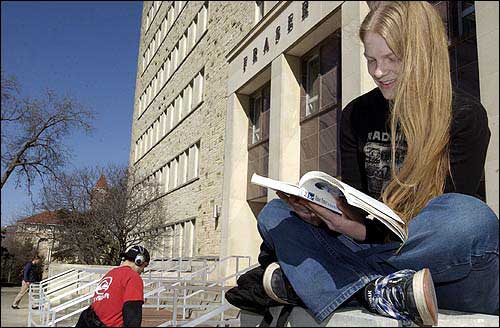
Daisy DeKnight is putting herself through college at Kansas University. A junior majoring in psychology, DeKnight was in Kansas' foster care system until aging
Committee chairwoman Rep. Lisa Benlon, R-Shawnee, was ready to shelve the bill when she asked if anyone in the audience wanted to speak.
DeKnight, who spent 4 1/2 years in foster care, raised her hand.
Without mincing words, she shared what it was like to cope with the exhaustion that comes with going to school full time while putting in 30 hours a week at a fast food restaurant. She also described the experience of going through life without a loving parent’s encouragement.
“When you’re in foster care, you feel like you’re worthless. It’s something you really have to deal with. I know I have,” she said, reflecting on her first three semesters at Kansas University.
Making a difference
DeKnight’s impromptu testimony kept the bill alive. An amended version later passed.
At the start of the fall semester, the 36 state-funded universities, community colleges and technical schools in Kansas are expected to waive tuition and fees for three students who were in foster care when they turned 18.
In the fall 2003, each school will have the option of waiving its tuition and fees for three more students.
Each year, each school could add three students. So after four years, KU, for example, could be waiving tuition and fees for as many as 12 students.
But Diane Lindeman, director of student financial assistance at the Kansas Board of Regents, isn’t expecting that many.
“According to the numbers we’ve been given, about 140 kids age out of foster care each year,” she said. “Out of this group, about 10 percent are expected to pursue some form of higher education, whether it be at KU or one of the community colleges.”
Lindeman said she has no way of knowing how many students will apply for the tuition-fee waivers, though at least two are expected to enroll at KU next semester. DeKnight is one of the two.
“I’ve heard it might be more than 10 percent,” Lindeman said.
SRS foots bill
Lindeman encouraged 18-year-olds in foster care to contact the registrar’s office at the school they want to attend.
“At this time, it looks we’re going to use the application process that we use for students who are dependents of police or firemen killed in action we waive tuition for them, too,” she said. “It’s a fairly simple form.”
After a student’s tuition is waived, the Board of Regents will send a bill to the state Department of Social and Rehabilitation. Plans call for SRS to use federal funds to pay the bill.
“I’m really glad we got this passed,” said Rep. Sue Storm, D-Overland Park. “Sometimes people forget that when these kids are in state custody, it means we’re their parents. We need to be responsible parents.
“I’m a teacher, and I’ve had kid in foster care in my classes. I’ve seen what they go through,” Storm said. “To think that some of them can overcome the odds against their making it to college is just mind-boggling. I say, ‘More power to them.'”
DeKnight has been too busy working and shopping for a car her old one died to keep track of the bill.
“Does this mean I don’t have to borrow so much money?” she asked. “Man, that would sure be nice.”
City Government
Lawrence Transit’s sales tax is ‘critical,’ its director says, and an increase could be on the ballot in November
New question arises around Rock Chalk Park trails: Why are nearly 2 miles of them missing?

City of Lawrence enters negotiations with a city manager candidate; announcement could come next week

Lawrence Outdoor Aquatic Center’s opening delayed until June 1 as renovation work continues
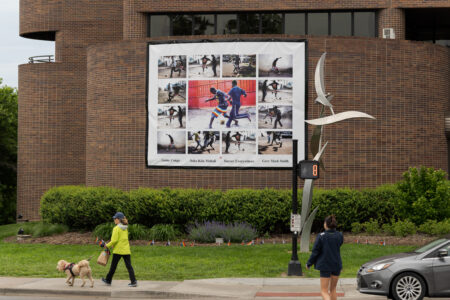
Part of soccer photo collage at Lawrence City Hall was pulled down during storm, but city says it will be back up soon