

The science of snow’s shape
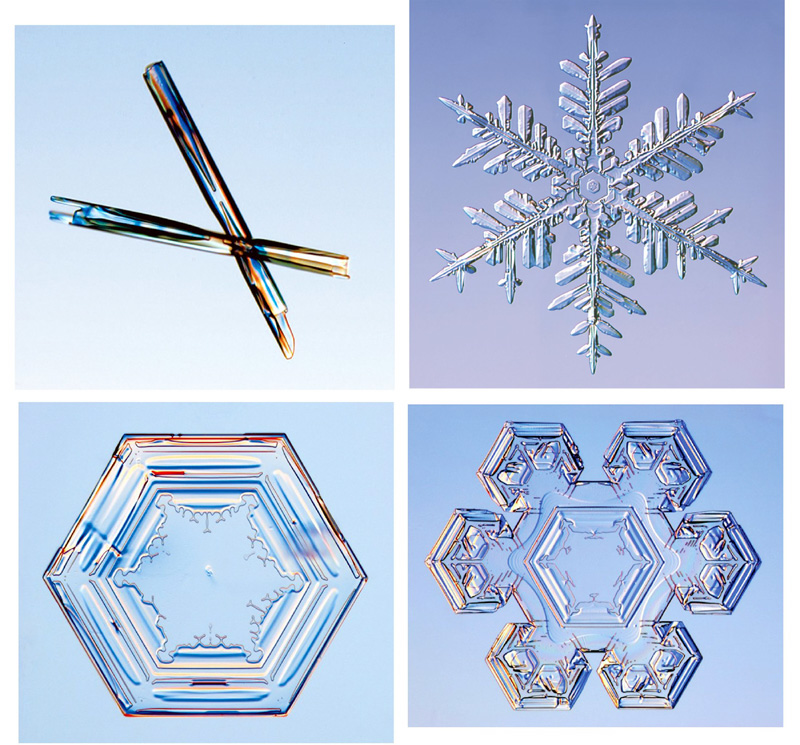
Snowflake patterns include, clockwise from top left, needles; long branches or dendrites; plates and dendrites combined; and a simple crystal plate. Illustrates KIDSPOST-SNOW (category l), by Margaret Webb Pressler © 2006, The Washington Post. Moved Wednesday, Dec. 20, 2006. (MUST CREDIT: Courtesy Ken Libbrecht.)
Sure we haven’t had a lot of snow yet. But winter doesn’t officially begin until Friday, so chances are good that some of the white stuff is in our future.
The beautiful patterns on some snowflakes come from the weather. As a snowflake falls, humidity and temperature determine its shape. Each patch of dry or humid air has a different effect on how a snowflake forms. Because no two flakes take exactly the same path to earth, each flake has a unique design.
Snowflakes grow faster when it’s more humid. The added moisture in the air creates flakes with long branches, or dendrites. When a snowflake falls through mostly dry air, it grows more slowly and becomes a simple crystal plate. Flakes that hit both dry and humid patches may have characteristics of plates and dendrites. There are many other types of snowflakes, as well, including needles and capped columns.