Study: Diet, exercise unrelated
People who work out regularly are just as likely to make a quick trip through the fast-food drive-through.
At least that’s what one Kansas University professor reports.
A study released Friday by Joseph Donnelly, professor of health, sport and exercise sciences at Kansas University, suggests young people who work out regularly aren’t eating any healthier than those who don’t work out.
“It is a popular notion that people change their eating habits and change them for the better when they exercise,” Donnelly said. “This spontaneous change to a healthy diet didn’t happen.”
The report, financed by a $2.4 million grant from the National Institutes of Health, focused on 74 men and women ages 17 to 35 who were overweight to moderately obese, but in good health, over a 16-month period. The report started at the University of Nebraska-Kearney in 1996 and transferred to Lawrence in 1997. Five 16-month study groups participated.
Donnelly found there was no difference between the dietary intake of the group that worked out 45 minutes a day from the control group.
Jennifer Devlin, 30, a third-year graphic design student at KU, said although she tried to maintain a healthy diet, the stress of school made it harder to accomplish. She said that before returning to school she followed a healthier diet.
“If I eat bad and get to the gym, it’s OK,” said Devlin, who works out for an hour three times a week.
That mentality is what Donnelly says prevents women from seeing positive results during routine exercise schedules.
Donnelly points out that on average, the women in the exercise group did not lose or gain weight while the men in the study lost an average of 5 percent of their total body weight.
“It appears that when women start regular physical activity programs, they are more prone to eat,” Donnelly said.
Chris Hultine, 19, a freshman at KU, said it was hard for him to believe people would work out regularly but not eat healthy.
“Eating junk food doesn’t really help,” said Hultine, who does muscle conditioning six times a week. “If you are going to do it seriously, get on some kind of food schedule.”
Donnelly said he hoped the study would help secure additional funds to explore gender, ethnic and behavioral factors in weight loss.
“The key is to find who responds and who doesn’t to different weight management techniques,” Donnelly said.
“It’s easier for people to believe they can eat whatever they want as long as they exercise.”
KU

KU Homecoming parade to return to campus after seven-year absence

‘Backyard’ allows even more fans to cheer on Jayhawks

Dole Institute of Politics announces summer lineup celebrating America’s 250th anniversary
KU Hospital Authority says CVS stole nearly $62M in drug savings
The University of Kansas Hospital Authority is suing CVS and its subsidiaries, alleging the mega pharmacy company ...
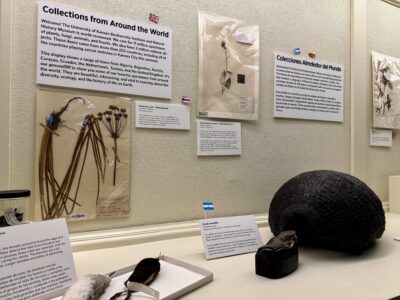
KU’s Natural History Museum’s new exhibition features specimens representing countries coming to KC region for 2026 World Cup